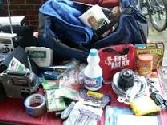



Go Kit
Every household should pack a Go Bag — a collection of items you may need in the
event of an evacuation. A Go Bag should be packed in a sturdy, easy-
Copies of your important documents in a waterproof and portable container (insurance cards, birth certificates, deeds, photo IDs, proof of address, etc.)
Extra set of car and house keys
Credit and ATM cards and cash, especially in small denominations. We recommend you
keep at least $50-
Bottled water and nonperishable food, such as energy or granola bars
Flashlight
Note: Traditional flashlight bulbs have limited lifespans. Light Emitting
Diode (LED) flashlights, however, are more durable and last up to 10 times longer
than traditional bulbs.
Battery-
Keep a list of the medications each member of your household takes, why they take them, and their dosages. Medication information and other essential personal items. If you store extra medication in your Go Bag, be sure to refill it before it expires.
First aid kit
Contact and meeting place information for your household, and a small regional map
Child care supplies or other special care items
Lightweight raingear and Mylar blanket
Food
When a disaster occurs, you might not have access to food, water and electricity
for days, or even weeks. Store enough emergency food to provide for your family for
at least 3 days.
Store food items that are familiar, rather than buying special emergency food. Consider any dietary restrictions and preferences you may have.
Ideal foods are: Shelf-
Mark a rotation date on any food container that does not already have an expiration date on the package.
Include baby food and formula or other diet items for infants or seniors.
Store the food in airtight, pest-
Most canned foods can safely be stored for at least 18 months. Low acid foods like meat products, fruits or vegetables will normally last at least 2 years. Use dry products, like boxed cereal, crackers, cookies, dried milk or dried fruit within six months.
After a power outage, refrigerated food will stay cold longer if you keep the door
closed. Food should generally be consumed within 4-
Emergency Supply Kit
Keep enough supplies in your home to survive on your own, or shelter in place, for
at least three days. If possible, keep these materials in an easily accessible, separate
container or special cupboard. You should indicate to your household members that
these supplies are for emergencies only. Check expiration dates of food and update
your kits when you change your clock during daylight-
One gallon of drinking water per person per day
Nonperishable, ready-
First aid kit
Flashlight
Note: Traditional flashlight bulbs have limited lifespan. Light Emitting
Diode (LED) flashlights, however, are more durable and last up to 10 times longer
than traditional bulbs.
Battery-
Whistle
Iodine tablets or one quart of unscented bleach (for disinfecting water ONLY if directed to do so by health officials) and eyedropper (for adding bleach to water)
Personal hygiene items: soap, feminine hygiene products, toothbrush and toothpaste, etc.
Phone that does not rely on electricity
Child care supplies or other special care items
Medicine and other health items
Pet food and supplies (including a pet carrier/cage)